I always slow down when a checkout total does not match the number in my head. Gift cards cause that exact moment. You buy a $50 card, someone redeems it later, tax appears, and suddenly the receipt feels like it charged something twice.
So, do gift cards have tax? Usually, the gift card itself is not taxed when you buy it. Sales tax usually shows up later, when the card is used to buy taxable goods or services. The gift card is the payment method. The item bought with it is the taxable purchase.
That distinction sounds small. It is not. It is the difference between understanding the receipt and thinking checkout quietly made up a fee.

The Short Answer for U.S. Shoppers
For most U.S. shoppers, there is usually no sales tax on gift cards at the moment of purchase. You are buying stored value, not a taxable product.
Tax usually applies when the card is redeemed. If the recipient uses a gift card to buy taxable shoes, electronics, makeup, or furniture, the retailer calculates tax on that underlying purchase. If the card is used for a nontaxable item or service, tax may not apply.
I would not turn that into “gift cards are never taxed.” Too broad. State rules, local rates, product categories, and promotional card structures can all change the answer. This is general shopping information, not personalized tax advice. If the amount is meaningful, check your state tax agency or a tax professional.
Buying a Gift Card vs Redeeming It
I separate gift card tax questions into two moments:
| Moment | What is happening | Tax result in many cases |
| Buying the card | You exchange money for stored value | Usually no sales tax |
| Redeeming the card | The card pays for goods or services | Tax depends on what is bought |
Washington’s Department of Revenue says taxes do not apply to gift cards and gift certificates at the time of sale. Minnesota’s Department of Revenue says gift card sales are not taxable, and when redeemed for taxable goods or services, tax is charged on the full sales price before subtracting the gift card.
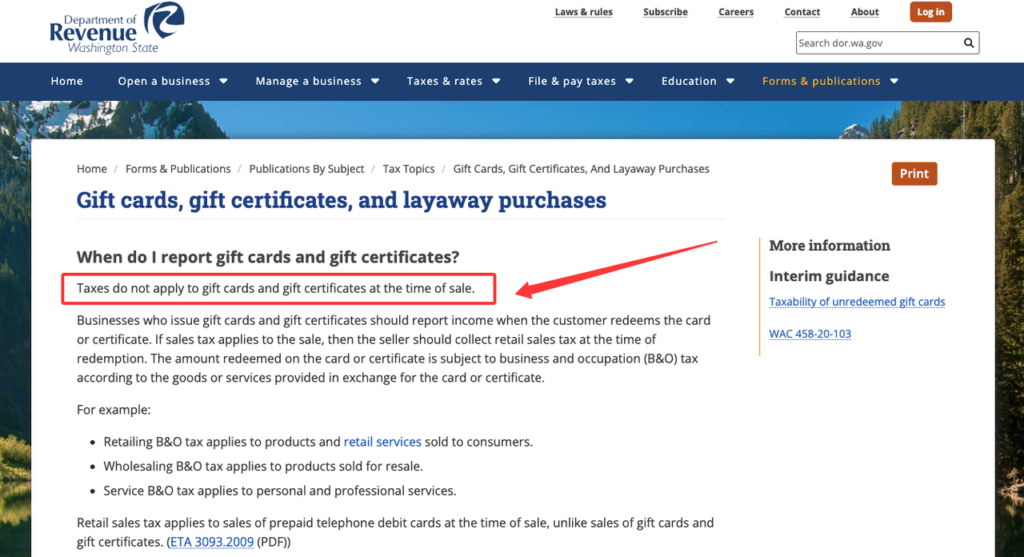
That is the clean mental model: gift card purchase tax is usually not the issue. Gift card redemption tax is where the tax shows up.
How Sales Tax Applies to the Underlying Purchase
A gift card does not make a taxable item tax-free. It only changes how the customer pays.
If a jacket is taxable when paid with a debit card, it is usually still taxable when paid with a gift card. Same jacket. Different tender.
Taxable and nontaxable goods or services
Here is the basic checkout math:
Product price: $80
Sales tax rate: 8%
Sales tax: $6.40
Checkout total: $86.40
Gift card used: $86.40
The tax is on the product, not on the card.
If the shopper buys a nontaxable grocery item, tax may be $0 depending on the state. California’s tax site explains that retail sales of tangible personal property are generally subject to sales tax, but the actual answer depends on category and rules in its sales and use tax overview.
This is why I do not like judging gift cards from the card amount alone. A $50 card is not always enough for a $49.99 online order once tax and shipping join the table.
State and local differences
Sales tax is local enough to be annoying. Two shoppers can redeem the same card at the same retailer and see different totals because their shipping addresses trigger different tax rates.
Online checkout makes this more visible. The cart may look covered, then the final page adds tax. Nothing mysterious happened. The tax engine finally had enough location and product information to calculate the full amount.
Activation and Service Fees Are Not the Same as Tax
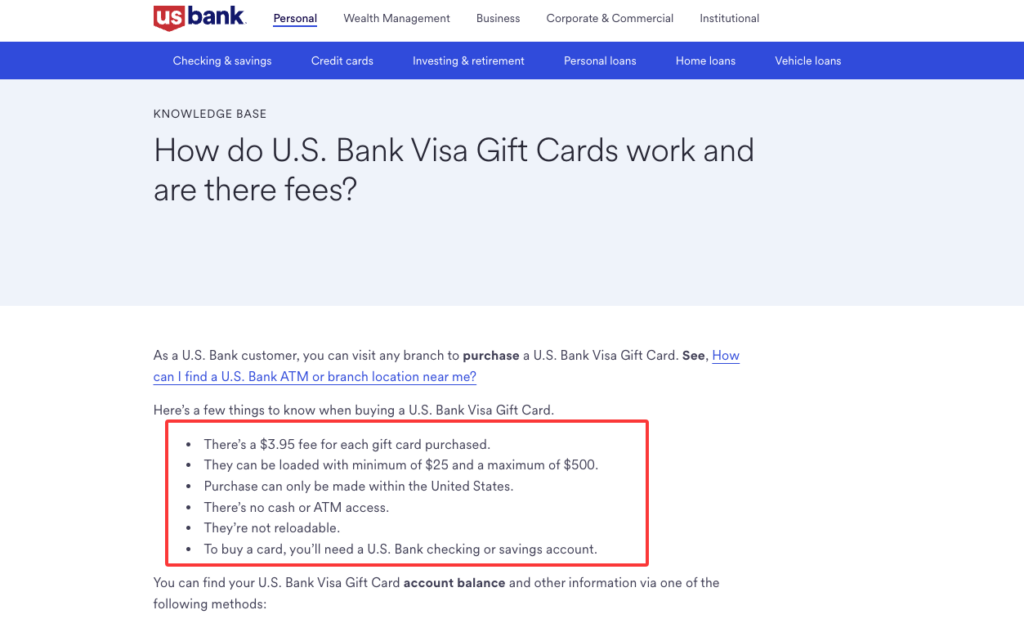
A gift card activation fee is not sales tax. It is a fee charged by the issuer or seller, usually on general-use prepaid cards such as Visa gift cards.
This is where “are Visa gift cards taxed?” gets messy in normal conversation. The stored value usually is not taxed like merchandise. But you may still pay more than the face value because of a purchase fee, activation fee, shipping fee, or handling fee.
For example, U.S. Bank says its Visa Gift Card has a purchase fee. Vanilla says that other than the purchase fee, there are no monthly or usage fees on its Vanilla Gift Card FAQ.
Example:
Card face value: $100
Purchase fee: $5.95
Sales tax on stored value: usually $0
Amount paid today: $105.95
Spendable value: $100
That $5.95 is not extra value. It is checkout friction with a receipt.
Discounted and Promotional Gift Card Scenarios
Discounted cards need a slower read.
If you buy a $50 store gift card for $45, the card may still work like $50 of tender when redeemed. But promotional cards, daily-deal vouchers, reward certificates, and loyalty credits can follow different rules.
Minnesota says tax treatment for coupons, rewards, rebates, and promotional discounts depends on the specific facts of the program. California’s CDTFA also treats discount instruments differently depending on how they are structured and redeemed.
My rule: do not trust the word “gift card” on the promo tile by itself. Read whether it is stored value, a bonus card, a single-use voucher, a reward certificate, or a future discount. Same-looking checkout label, different tax result.
Worked Checkout Examples
Example 1: Buying a store gift card
Card face value: $100
Purchase fee: $0
Sales tax at purchase: $0
Amount paid today: $100
Spendable value: $100
This is the simplest version.
Example 2: Redeeming a store gift card on taxable goods
Product price: $80
Sales tax: $6.40
Checkout total: $86.40
Gift card used: $86.40
Remaining balance: $13.60
The gift card pays the tax-inclusive total.
Example 3: Buying a Visa-style gift card
Card face value: $100
Activation or purchase fee: $5.95
Sales tax on stored value: usually $0
Amount paid today: $105.95
Spendable value: $100
This is not tax, but it still affects the real cost.
Example 4: Card balance too low online
Product price: $48
Shipping: $4.99
Sales tax: $3.92
Checkout total: $56.91
Gift card balance: $50
Result: possible decline unless split payment is allowed
The card did not fail because the gift card was taxed. It failed because the full checkout total exceeded the balance.
Limits and When to Check Local Rules
Check local rules when the card is promotional, donated, issued as a reward, used for business, bought through a marketplace, or redeemed across state lines.
Also check the receipt language. Sales tax, purchase fee, service fee, shipping, and convenience fee are not the same thing. I know that sounds picky. Checkout receipts reward picky.
For a normal consumer purchase, the safest habit is to separate the card face value, fees, product price, tax, shipping, and remaining balance before deciding whether the route is actually better.
FAQ
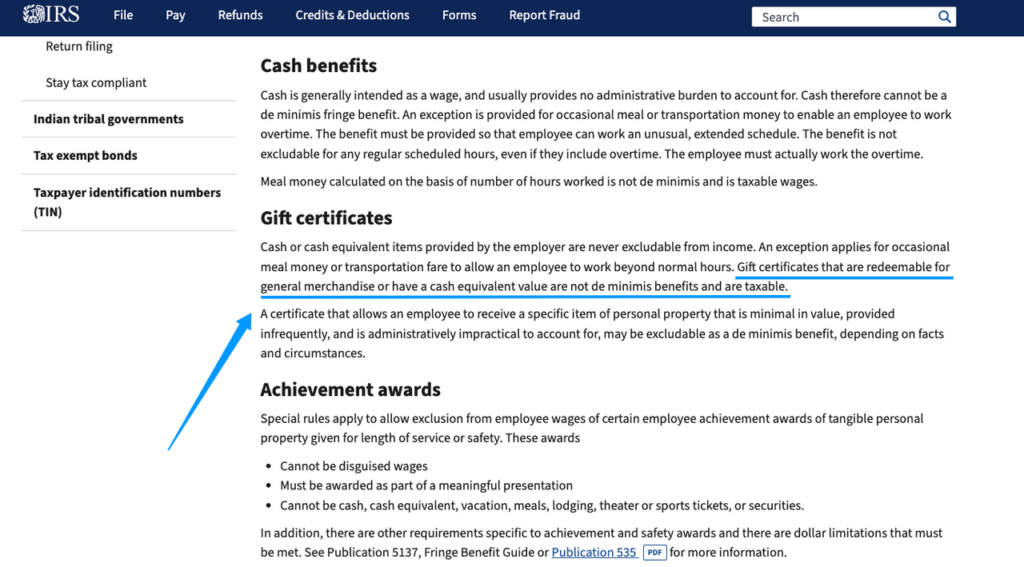
Are employee gift cards treated as taxable compensation?
Often, yes. The IRS says cash and cash-equivalent fringe benefits, including many gift cards and gift certificates, are generally not excludable as de minimis benefits. The IRS de minimis fringe benefits page says gift certificates redeemable for general merchandise or with cash-equivalent value are taxable.
Does a refund reverse sales tax paid with a gift card?
Usually, a return reverses the taxable sale and the related sales tax according to the retailer’s policy and state rules. The refund may go back to the original gift card or store credit. Keep the card until the return window closes.
Are donated gift cards treated differently?
For sales tax, donating an unused card is different from redeeming it for taxable goods.
Are gift card rewards from loyalty programs taxable income?
Sometimes rewards work like purchase discounts. Sometimes rewards, prizes, referrals, or employer-provided cards may be income.
Conclusion
So, do gift cards have tax? Usually not when you buy the stored-value card. Tax usually appears when the card is redeemed for taxable goods or services.
Before paying, I would separate the pieces: face value, activation fee, product price, sales tax, shipping, and balance. That is the whole checkout route. And once you see the whole route, the “deal” gets a lot quieter.
Related posts: