Hey, I’m Vivian. Are you like me, who becomes suspicious when a payment method seems easier than it actually is?
Gift cards are exactly that kind of checkout tool. They feel like cash, but the rules change depending on whether you are using a store card, a Visa-style prepaid card, a digital code, or a promotional balance.
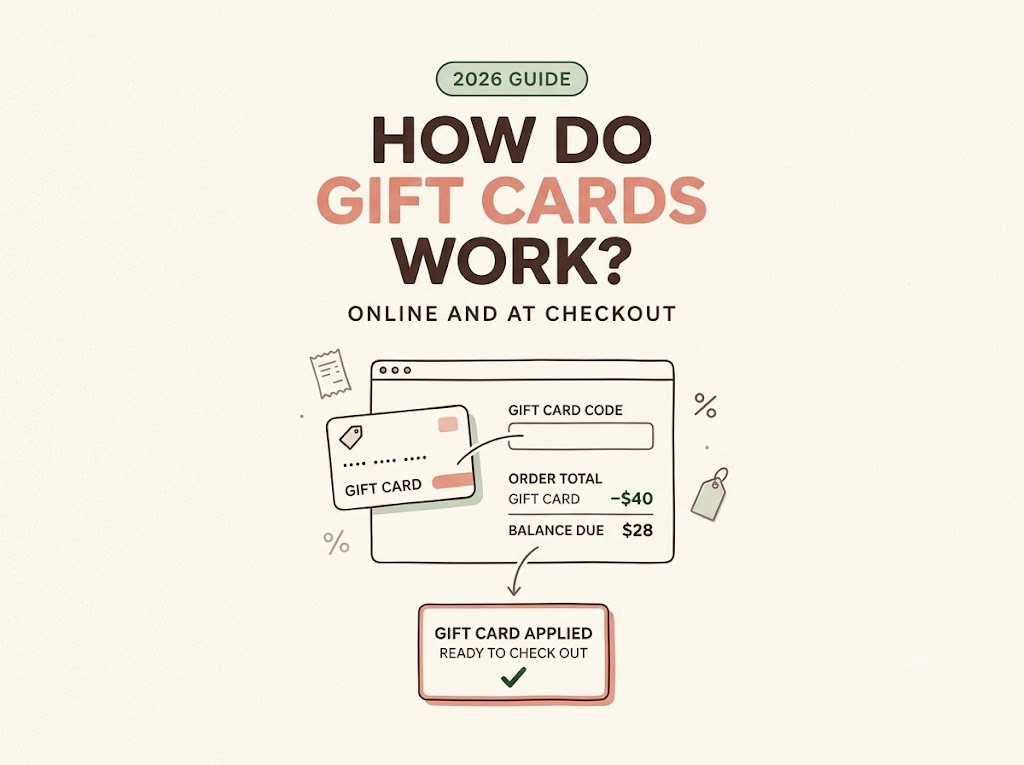
So, how do gift cards work? A gift card holds stored value. At checkout, the merchant or card network checks whether the card is active, accepted, and has enough balance for the transaction. Simple in theory. Slightly less simple when tax, shipping, billing ZIP, partial payment, refunds, and merchant restrictions get involved.
The deal is not real until it survives checkout. Gift cards prove that sentence more often than they should.
The Main Types of Gift Cards
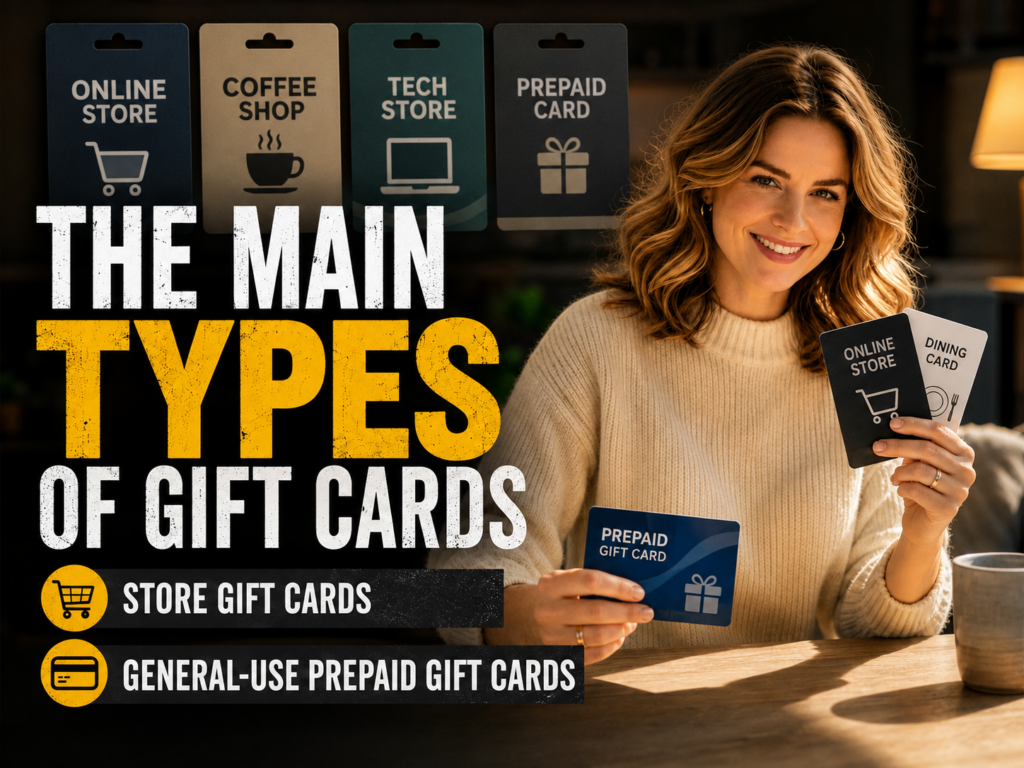
Store gift cards
A store gift card is a closed-loop card. It usually works only with one retailer, restaurant, app, or affiliated brand family. Think Target, Sephora, Apple, Starbucks, or a specific restaurant group.
Online checkouts usually place store gift cards in a dedicated “gift card” field, separate from credit and debit cards. That is usually separate from the credit or debit card field. You enter the card number and PIN, then the merchant checks the gift card balance inside its own system.
The nice part is that store cards are usually straightforward inside that merchant’s checkout. The catch is the word “inside.” A store card may not work for marketplace sellers, third-party items, subscriptions, international orders, or excluded categories.
If the balance does not cover the full order, some retailers allow split tender. Some do not. I would never build a checkout plan around split payment until I see that the merchant actually supports it.
General-use prepaid gift cards
A general-use prepaid gift card is different. It carries a payment network logo, such as Visa, Mastercard, or American Express, and can usually be used at many merchants that accept that network.
The CFPB’s Regulation E gift card rules distinguish store gift cards from general-use prepaid cards. That distinction matters at checkout.
Here is the simple store gift card vs Visa gift card split:
| Feature | Store gift card | Visa-style prepaid gift card |
| Where it works | One merchant or brand group | Many merchants accepting the network |
| Checkout field | Gift card field | Credit/debit card field |
| Billing ZIP | Often not needed | Issuer-specific; may be requested online |
| Purchase fee | Usually none | Often has a purchase or activation fee |
| Split tender | Merchant-specific | Merchant-specific; online support varies |
| Refund path | Usually back to store card | Often back to the prepaid card |
If you are learning how to use gift cards online, start with the field. Store card in the gift card box. Visa-style prepaid card in the credit/debit card section. That one small mismatch can cause an unnecessary decline.
What Happens When a Gift Card Is Purchased and Activated
Gift card activation is the moment the stored value becomes usable. With a physical card bought in a store, the cashier usually loads and activates it at purchase. With a digital card, activation may happen after the online order is completed or when the recipient receives the code.
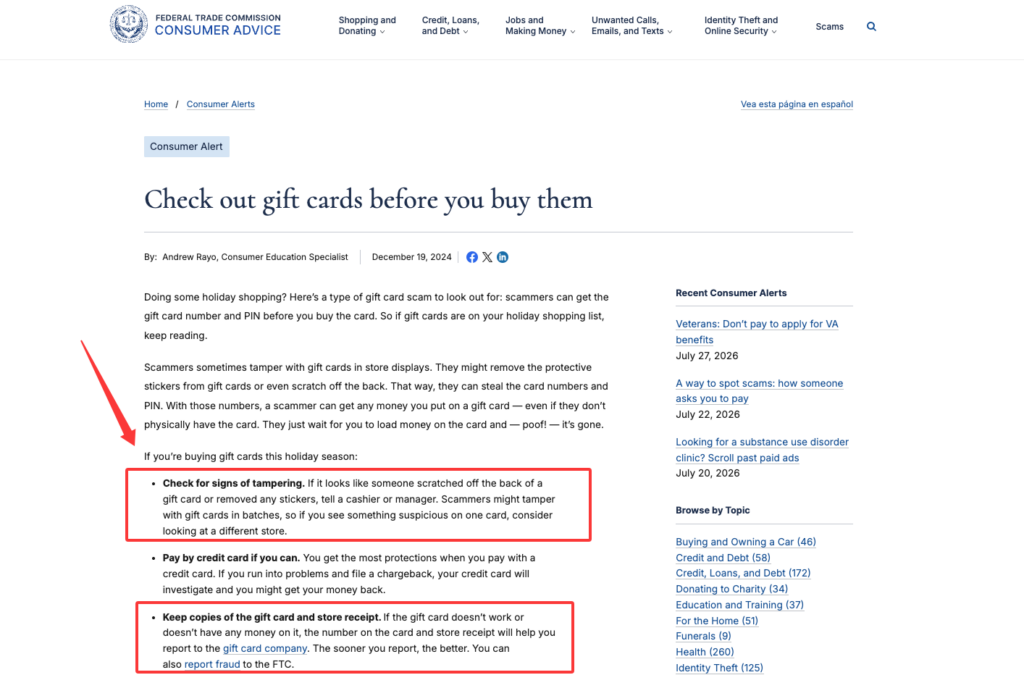
I keep the receipt because it may be the only proof that the card was purchased and activated correctly.
If a card has no funds, was tampered with, or fails later, the receipt may be the only proof that the card was properly purchased. The FTC tells shoppers to inspect cards for tampering and keep copies of the card and receipt in its gift card buying tips.
After activation, I check the balance before using the card. Not after the decline. Before. A $50 card with $42.18 left behaves like a $42.18 card, no matter how confident the plastic looks.
How Online Checkout Authorization Works
Card details and billing information
Store cards usually ask for a card number and PIN. The merchant applies the balance directly to your cart.
Visa-style prepaid gift cards usually behave more like debit cards online. Visa says online use typically requires the 16-digit card number, expiration date, and CVV on its Visa gift card help page. Some issuers also ask for a name, address, or ZIP code.
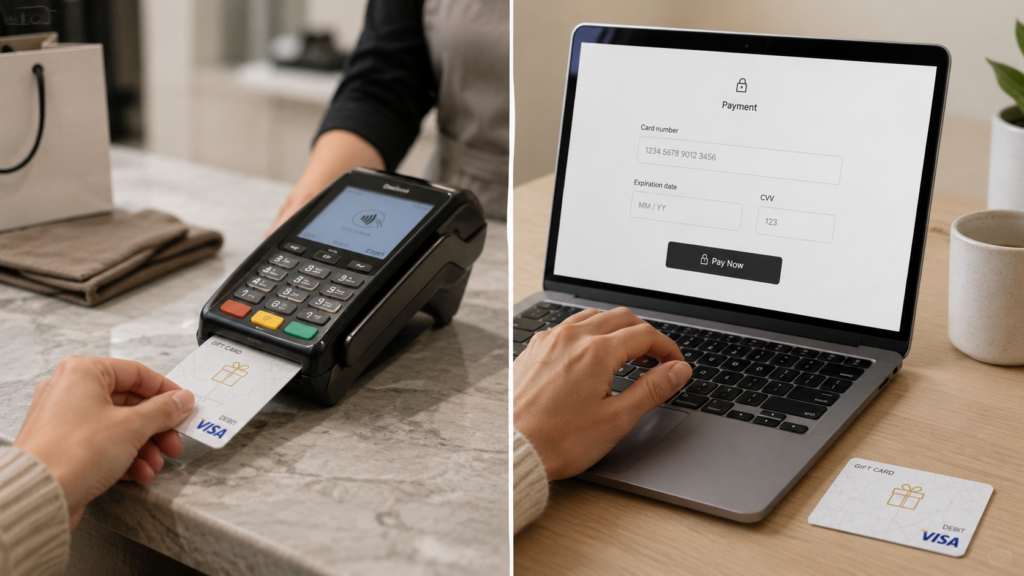
Follow the issuer’s registration or billing instructions. Some cards allow or require the cardholder to register a ZIP code or address before online use. Random guessing is not a strategy. It is just a faster way to collect declines.
Available balance and partial authorization
This is where gift cards get fussy.
A general-use prepaid card often needs enough available balance to cover the full authorized amount. That may include the product price, tax, shipping, tips, restaurant holds, gas station holds, hotel deposits, or car-rental holds.
Example:
Product price: $48
Shipping: $4.99
Estimated tax: $3.92
Checkout total: $56.91
Gift card balance: $50
That transaction may decline. Not because the card is broken. Because the full authorization is higher than the balance.
Some merchants support partial authorization or split tender. Some allow one store gift card plus one credit card. Some allow multiple store cards. Some online merchants do not allow multiple Visa gift cards in one order, and support varies by checkout system.
How Taxes, Fees, and Expiration Affect Value
Tax can be the quiet reason a gift card does not cover the order.
State treatment varies. In Minnesota, buying a gift card is not treated as a taxable sale; tax applies when it is redeemed for taxable goods or services. Minnesota’s Department of Revenue says gift card sales are not taxable, and when a card is redeemed for taxable goods or services, sales tax is charged on the full sales price before subtracting the card.
So if you buy a $100 store gift card, you may pay $100. If you later use it on an $80 taxable item with 8% tax, checkout is $86.40. The card pays the tax-inclusive total.
Fees are separate. A gift card activation or purchase fee is common with Visa-style prepaid cards. If you buy a $100 Visa gift card and pay a $5.95 purchase fee, the recipient still gets $100 of spending value. You paid $105.95. That fee is part of your route cost, not extra gift value.
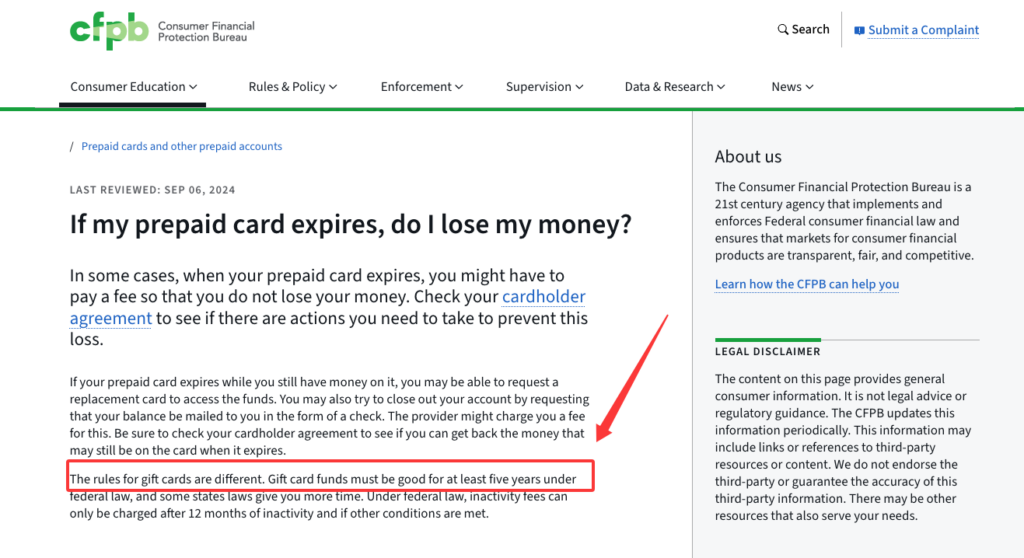
Expiration rules also vary. Federal rules generally require gift card funds to be valid for at least five years, and inactivity fees are limited, according to the CFPB’s prepaid card expiration guidance. State rules may give stronger protections, so I would not assume one national rule covers every card perfectly.
Returns, Refunds, and Disputed Purchases
A gift card refund usually goes back to the original payment method. If you paid with a store gift card, expect the refund to return to that card or to store credit. If you paid with a Visa-style prepaid card, the merchant may refund the prepaid card.
This is why I keep gift cards until the return window closes. A card with a zero balance today may receive a refund next week.
For normal returns, start with the merchant. For unauthorized activity on a general-use prepaid card, contact the issuer using the number on the card or issuer website. Saparo should not be described as processing gift card refunds or disputes. At most, a checkout route can flag that a gift card may affect the refund path.
When a Gift Card Improves—or Complicates—a Checkout Route
A gift card improves a checkout route when the savings are real, the merchant is stable, and the rules are clear.
I like gift cards when:
- I already planned to buy from that retailer.
- The card is discounted with clear terms.
- The balance covers the full tax-inclusive total.
- The merchant accepts the card online.
- Split tender is clearly supported if needed.
- The refund path is acceptable.
I slow down when:
- The balance is slightly below the order total.
- The checkout does not support multiple cards.
- The order involves hotels, car rentals, gas, restaurants, tips, or deposits.
- The card comes from a third-party marketplace with unclear support.
- The retailer is closing stores or financially unstable.
- A refund would trap the money in store credit.
A 10% discounted gift card can be useful. It can also strand $3.12 on a card you forget about. Small thing, but checkout math is built out of small things.
FAQ
Can gift cards be used for hotel or car-rental deposits?

Sometimes, but I do not love this route. Hotels and car-rental companies often place holds above the expected charge. A fixed-balance prepaid gift card may decline if the hold exceeds the available balance. A regular credit card is usually cleaner for deposits.
Can one gift card use more than one billing address?
It depends on the issuer. Some Visa-style gift cards must be registered with a name and address before online use, while others provide different instructions. Use the billing details registered with the card issuer. Store gift cards often do not use billing addresses at all.
What happens if a merchant closes before the card is used?
Store gift cards carry merchant risk. If the retailer stops accepting cards, you may need to check bankruptcy notices, contact the merchant, file a claim, or ask your state consumer protection office what options exist. A general-use prepaid card is different because it is tied to an issuer and network, not one store.
Do digital wallets change a gift card’s merchant restrictions?
No. A digital wallet changes how the card is presented. It does not erase issuer limits, domestic-use rules, recurring-payment blocks, or merchant acceptance restrictions.
Conclusion
Once you understand how gift cards work, the checkout pattern is easier to read: identify the card type, confirm activation, check the balance, include tax and shipping, and know where refunds will go.
My rule is simple: use a gift card when it makes the final checkout decision clearer. If it adds failed authorization risk, refund friction, or a stranded balance, the loud discount may not be the better route. How about you?
Related post: