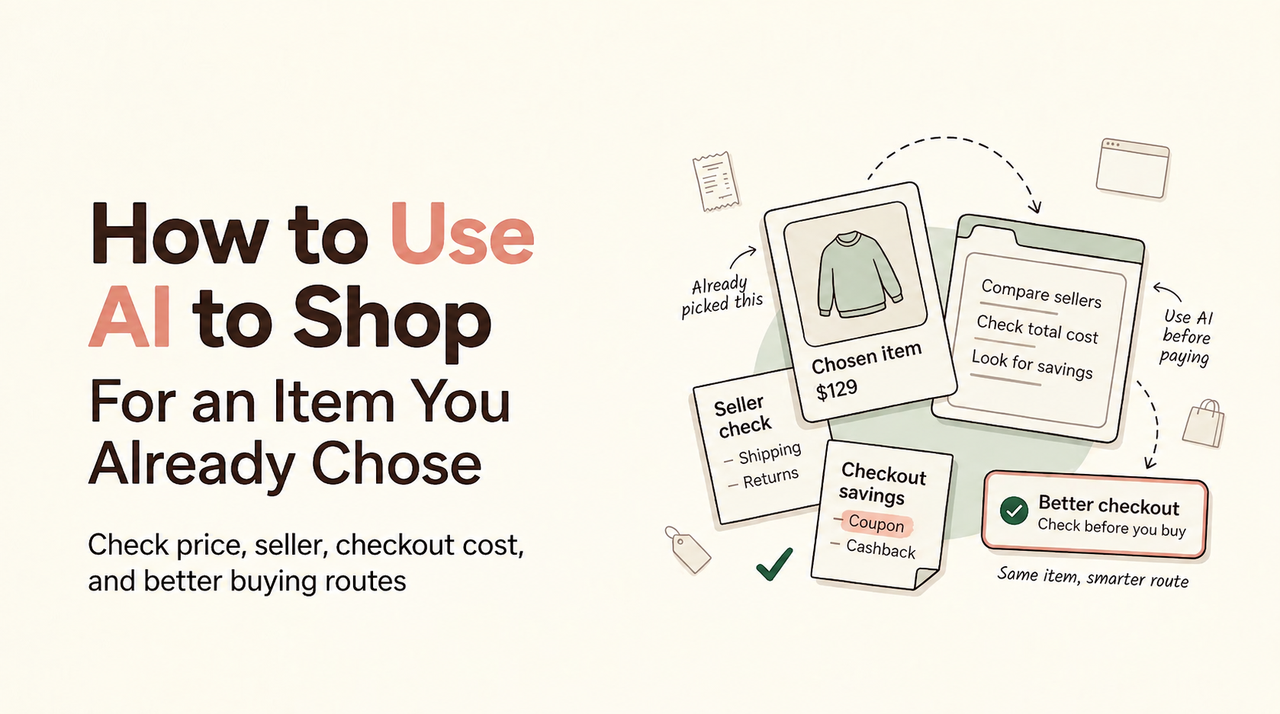
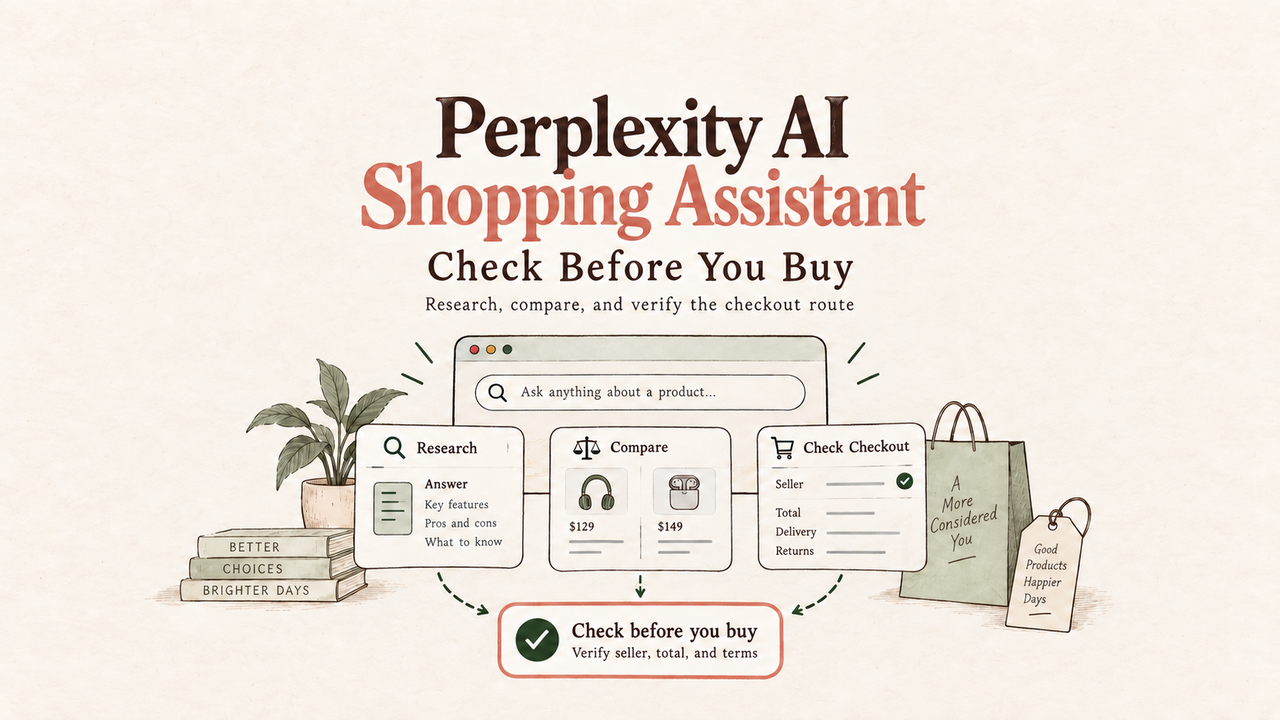
I’m Vivian. I get cautious whenever AI shopping is sold as “the agent will just buy everything for you.” For anyone searching for agentic commerce autonomous shopping AI 2026 use cases, the useful question is narrower: which part of shopping should an agent handle, and where should the shopper stay in control?
That distinction matters. Research is not the same as recommendation. Recommendation is not the same as checkout preparation. Checkout preparation is not the same as an autonomous purchase. The deal is not real until it survives checkout, and the order is not safe just because an AI helped assemble it.
Agentic Commerce in 2026
Agentic commerce means AI systems can take actions inside a shopping journey, not just answer questions. Those actions might include finding products, comparing retailers, preparing a cart, checking delivery options, applying a payment method, or requesting a purchase after the shopper approves it.
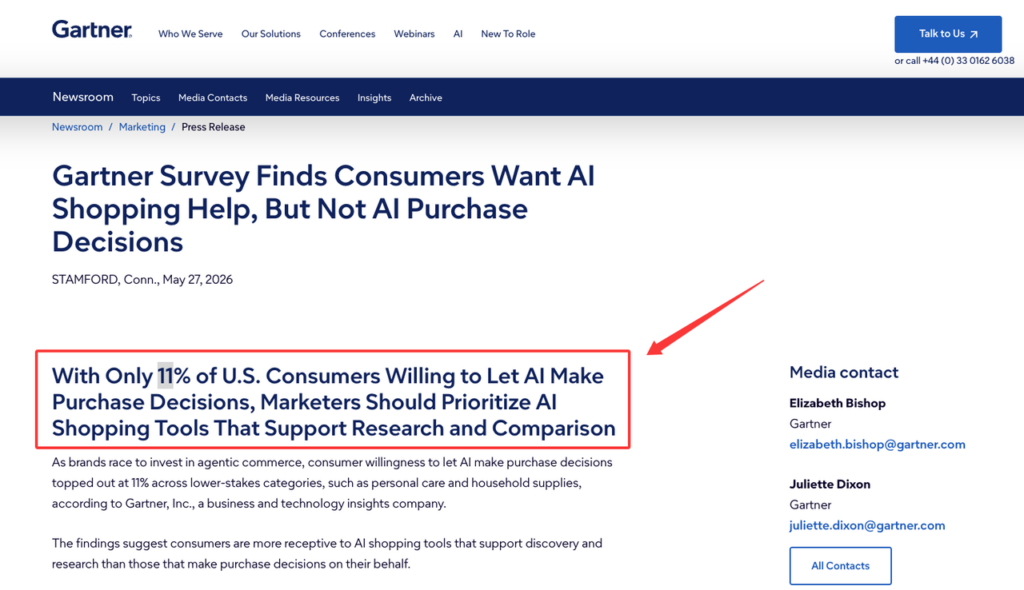
The direction is real, but I would not treat 2026 as the year shoppers hand over the whole wallet. A Gartner consumer survey found that willingness to let AI make purchase decisions topped out at 11%, even in lower-stakes categories, while more were open to AI narrowing choices, comparing prices, and finding deals.
That matches what I see as the practical lane: AI agents for shopping are useful when they reduce tab-jumping and expose trade-offs. They get risky when they hide assumptions, skip confirmation, or treat “buy now” as the natural end of every task.
Visa’s agentic commerce trust report points in the same direction: shoppers want convenience and savings, but they also want transparency, data control, and clear decision rules. Worth checking, not worth assuming.
Four Levels of AI Shopping Autonomy
Research and discovery
This is the lightest level. The shopper asks for help finding products that match a budget, use case, style, size, feature set, or brand preference.
A good discovery agent can reduce noise. It can ask, “Do you care more about battery life or weight?” It can compare laptops by RAM, return policy, and delivery date instead of throwing ten product cards at you.
OpenAI’s March 2026 update on product discovery in ChatGPT is a clean agentic commerce example here: richer visual browsing, side-by-side comparison, product details, and merchant catalog support. That is still mostly decision support. The user is deciding what looks right.
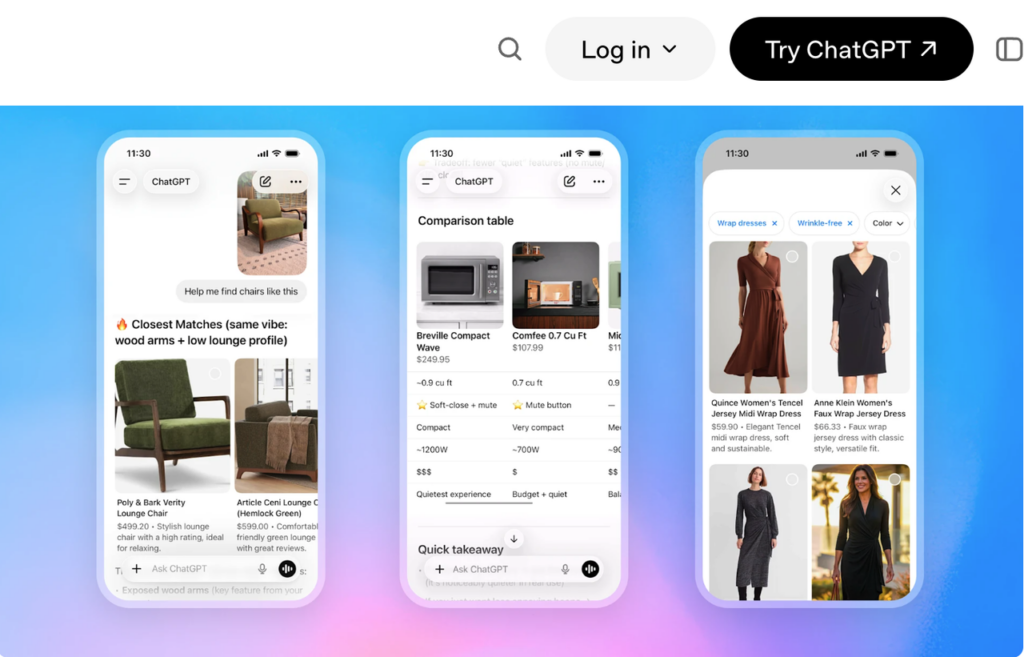
This is where an AI shopping assistant can be genuinely helpful. I still check the product page before trusting the answer, especially for variants, seller identity, warranty, and stock.
Comparison and route planning
This level moves from “what should I buy?” to “where should I buy it?”
Now the agent compares retailer price, shipping, tax, coupon eligibility, cashback, card rewards, delivery speed, return policy, and support. This is where many AI shopping use cases become more valuable, because product-page price is only the beginning.
A bigger percentage does not always mean a better deal. A 15% coupon can lose to free shipping. A higher cashback rate can lose if the category is excluded. A cheaper marketplace seller can lose if returns are harder.
Checkout preparation
Checkout preparation is more active. The agent may assemble a cart, surface eligible discounts, prepare shipping details, or guide the shopper toward a supported checkout flow.
Google’s January 2026 announcement of the Universal Commerce Protocol is important here because it describes agentic commerce across discovery, buying, and post-purchase support, while keeping eligible retailers as the seller of record.
That seller-of-record detail is not boring. It affects receipts, returns, taxes, support, loyalty, and disputes. Before you click pay, check one more thing: who is actually selling the product?
Checkout preparation should feel like a well-organized draft, not a hidden transaction. The shopper should see the item, variant, price, shipping address, delivery timing, taxes, fees, payment method, and return terms before anything is finalized.
Autonomous purchase
Autonomous purchase is the highest level. Here, the shopper authorizes an agent to complete a purchase on their behalf.
Amazon’s beta Buy for Me is a useful reference point. In Amazon’s description, eligible U.S. app users could request Amazon to buy select products from brand websites when Amazon did not sell the item, with order details confirmed in the Amazon experience and delivery, returns, exchanges, and customer service handled by the brand store.
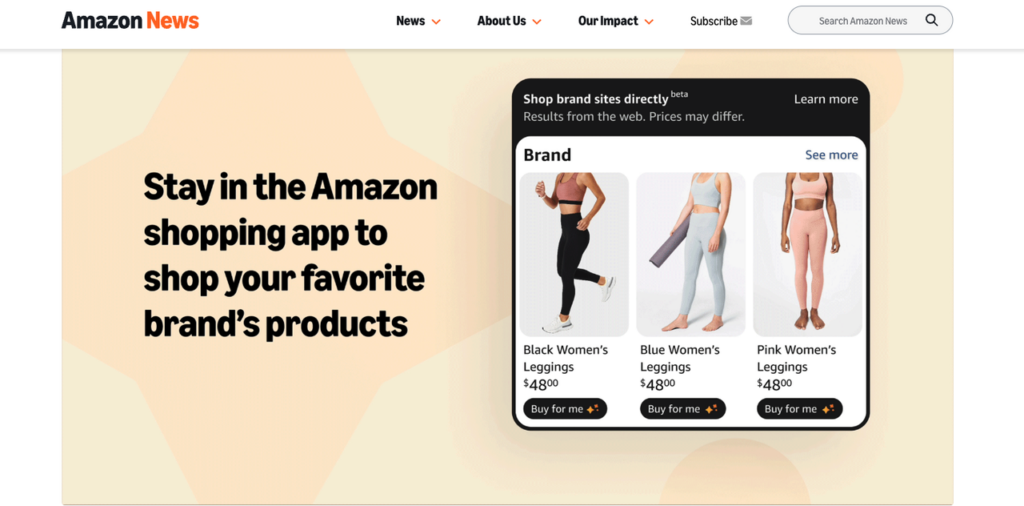
That is not the same as silent buying. The control points matter: what the shopper requested, what details were confirmed, which merchant fulfilled the order, and who handles support afterward.
For low-risk repeat purchases, autonomous shopping AI may be acceptable. For expensive, sized, customized, perishable, or hard-to-return items, I want human-in-the-loop shopping. Not because AI is useless. Because the cost of being wrong is higher.
Consumer Shopping Use Cases That Matter
High-value product research
High-value purchases are where agentic commerce earns attention: laptops, appliances, furniture, cameras, fitness gear, mattresses, and travel items.
I rarely think it is worth comparing five checkout routes for a $14 cable. A $900 laptop is different. The agent can compare specs, warranty, return window, delivery time, retailer reliability, and total checkout cost.
The useful output is not “best laptop.” It is a shortlist with reasons: best for battery life, best for repairability, best immediate price, best return safety, best total value after verified discounts.
Price tracking and repeat purchases
Repeat purchases are another practical fit. Think pet food, skincare, printer ink, household supplies, vitamins, or school items.
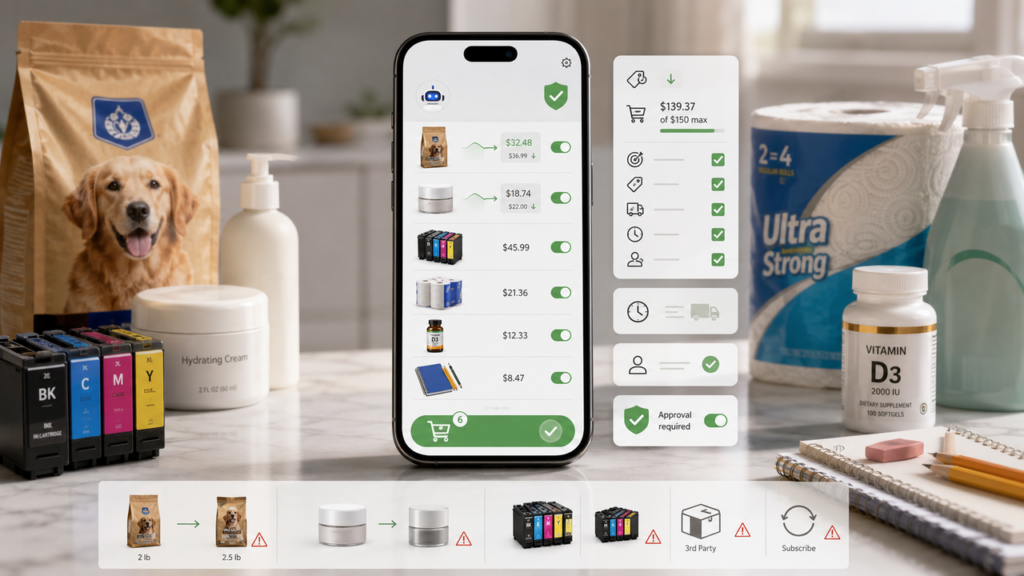
The agent can watch for price drops, remind you when a better route appears, or prepare a reorder when your usual product meets a target price. But I would set strict rules: exact item, maximum all-in price, allowed substitutions, delivery deadline, and whether approval is required.
A repeat order is only “easy” if the product is truly the same. New packaging, changed size, third-party seller, and subscription terms can quietly change the value.
Multi-retailer checkout decisions
This is the Saparo-shaped problem: one product, several retailers, different coupons, cashback rates, shipping thresholds, card offers, and return policies.
The lowest shelf price may not win. The strongest route may be the one with a slightly higher product price but better shipping, clearer returns, and a card offer that applies today.
This is also where generic shopping bots can get too shallow. A bot that only finds a product is not enough. A real checkout decision needs tax, shipping, merchant restrictions, payment method limits, and reward uncertainty.
Where Autonomous Shopping Breaks Down
Product variants and delivery constraints
AI can confuse close variants. That sounds small until the wrong product arrives.
I pay extra attention to size, color, model year, bundle contents, refurbished status, seller identity, voltage, compatibility, and delivery address. For clothing, furniture, appliances, and electronics, one wrong attribute can erase the value of the entire route.
Delivery also creates traps. A product can be cheaper at Retailer A but arrive after the date you need it. Or it can require signature, pickup, installation, freight delivery, or a restocking fee. Good headline, complicated checkout.
Coupon, cashback, and reward uncertainty
This is where I slow down.
Coupons may exclude sale items. Cashback may depend on category, browser tracking, last-click attribution, or coupon rules. Card-linked offers may require activation and may not work through every payment method. Loyalty rewards can change the refund path.
An agent can help organize those signals, but it should label them properly: immediate discount, expected cashback, conditional reward, estimated points value, or unavailable. Do not let an agent add all of those into one “savings” number without explaining timing and risk.
For more on marketplace-specific AI behavior, I would separate this broader trend from [Amazon shopping AI](/guides/amazon-shopping-ai), because Amazon’s shopping tools operate inside a very specific retail environment.
A User-Control Checklist Before Delegating a Purchase
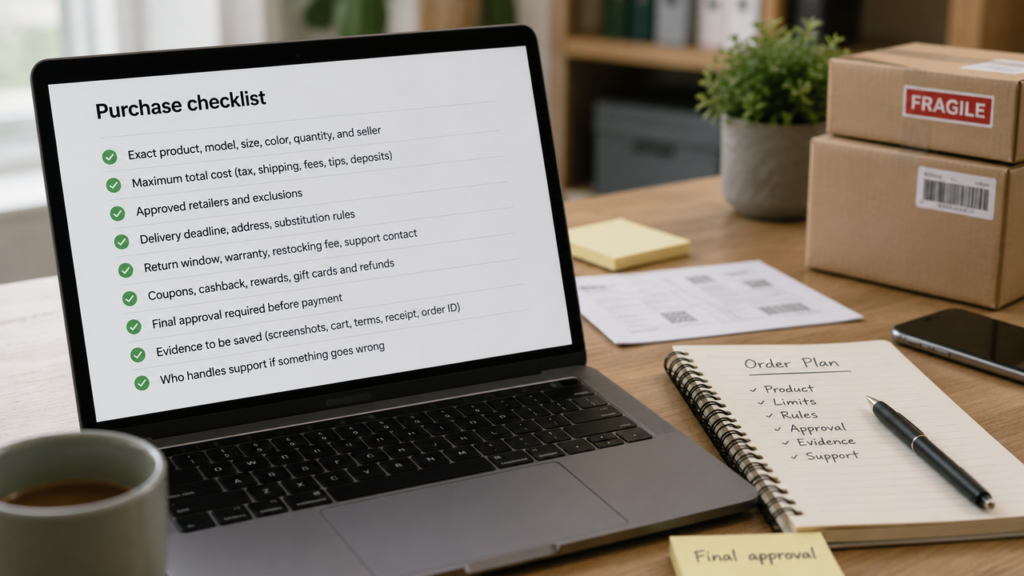
Before letting an agent prepare or place an order, I would check:
- Exact product name, model, size, color, quantity, and seller
- Maximum total cost, including tax, shipping, fees, tips, and deposits
- Approved retailers and any retailers you want excluded
- Delivery deadline, delivery address, and substitution rules
- Return window, warranty, restocking fee, and support contact
- Whether coupons, cashback, rewards, or gift cards may affect refunds
- Whether final approval is required before payment
- What evidence will be saved: screenshots, cart details, terms, receipt, and order ID
- Who handles support if the order goes wrong
Human-in-the-loop shopping is not a step backward. It is the control layer that makes agentic AI shopping news more useful for real shoppers.
FAQ
How should agent-assisted orders appear in purchase history?
They should show the merchant, item, amount, date, payment method, delivery status, and whether an agent helped prepare or place the order. I would also want a visible record of the shopper’s approval, especially for autonomous purchases.
What evidence helps dispute an incorrect agent-placed order?
Save the product page, variant details, checkout confirmation, order receipt, merchant terms, return policy, payment record, and any agent instruction history. If the issue involves cashback or a reward, keep the offer terms visible. This is general shopping hygiene, not legal advice.
Can agent-assisted purchases affect loyalty or warranty eligibility?
Yes, they can. Loyalty points, warranty coverage, return rights, and promotional eligibility may depend on seller of record, checkout channel, payment method, account login, and merchant terms. I would verify those before treating an AI-prepared route as equivalent to buying directly.
Who handles support when multiple services complete one order?
Start with the seller of record for transaction and return questions, but confirm separately who handles fulfillment, exchanges, warranty, and product support. The agent platform may handle app experience, order routing, or payment authorization questions. Card issuers or wallet providers may handle payment disputes; payment networks generally provide the dispute rules and infrastructure rather than first-line consumer support. The cleanest route is the one where these roles are visible before purchase.
Conclusion
The practical story behind agentic commerce autonomous shopping AI 2026 use cases is not “let AI buy everything.” It is: let AI do the tedious research, comparison, and checkout preparation, then keep the shopper’s approval where the money changes hands.
I like agentic commerce most when it makes the checkout decision clearer: fewer tabs, cleaner comparisons, better evidence, and no pretend certainty. The deal is not real until it survives checkout, and a smarter agent should make that easier to see.
Related posts: